Writing with Others

One of the joys of technology has been the opportunity to write with others. I have participated in weekly writing with the TeachWrite community; in James Crews’ The Monthly Pause; and in workshops with Georgia Heard and Ralph Fletcher. These experiences have been transformational for me personally and as a writer.

This past week, Georgia Heard used a poem to inspire our writing, “You Can’t Have it All” by Barbara Ras which you can read here. I didn’t realize how much I needed this exercise in noticing, in remembering moments of awe, in gratitude. How much I needed to hush my fears and lay down despair. Georgia reminded me that we can look at life through the lens of abundance or the lens of despair. We have the choice. Too often, of late, I have let fear cloud my view.

Barbara Ras’ poem ends with “There is the voice you can still summon at will, like your mother’s, it will always whisper, you can’t have it all, but there is this.”

Here are a few lines that I wrote – my own “there is this” – still very much in draft form. I encourage you to try this practice: You can’t have it all, but you can have…See where it might take you.

Draft:

You can’t have it all
but once,
I witnessed an autumn sunrise in a golden aspen grove
as sheep were led down the steep mountain road
by an Indian on horseback.
And more than once,
I’ve stood in meadows of bluebells surrounded in softness
up to my knees
or even my hips.
As a child,
I ate watermelon cooled in a canyon stream
with the scent of pine so cold and fresh
it seemed like summer and winter joined hands.
For a few moments,
Didn’t I have it all?
Thank you to all who make this writing space
a place of safety, support, and beauty.

Sweetness

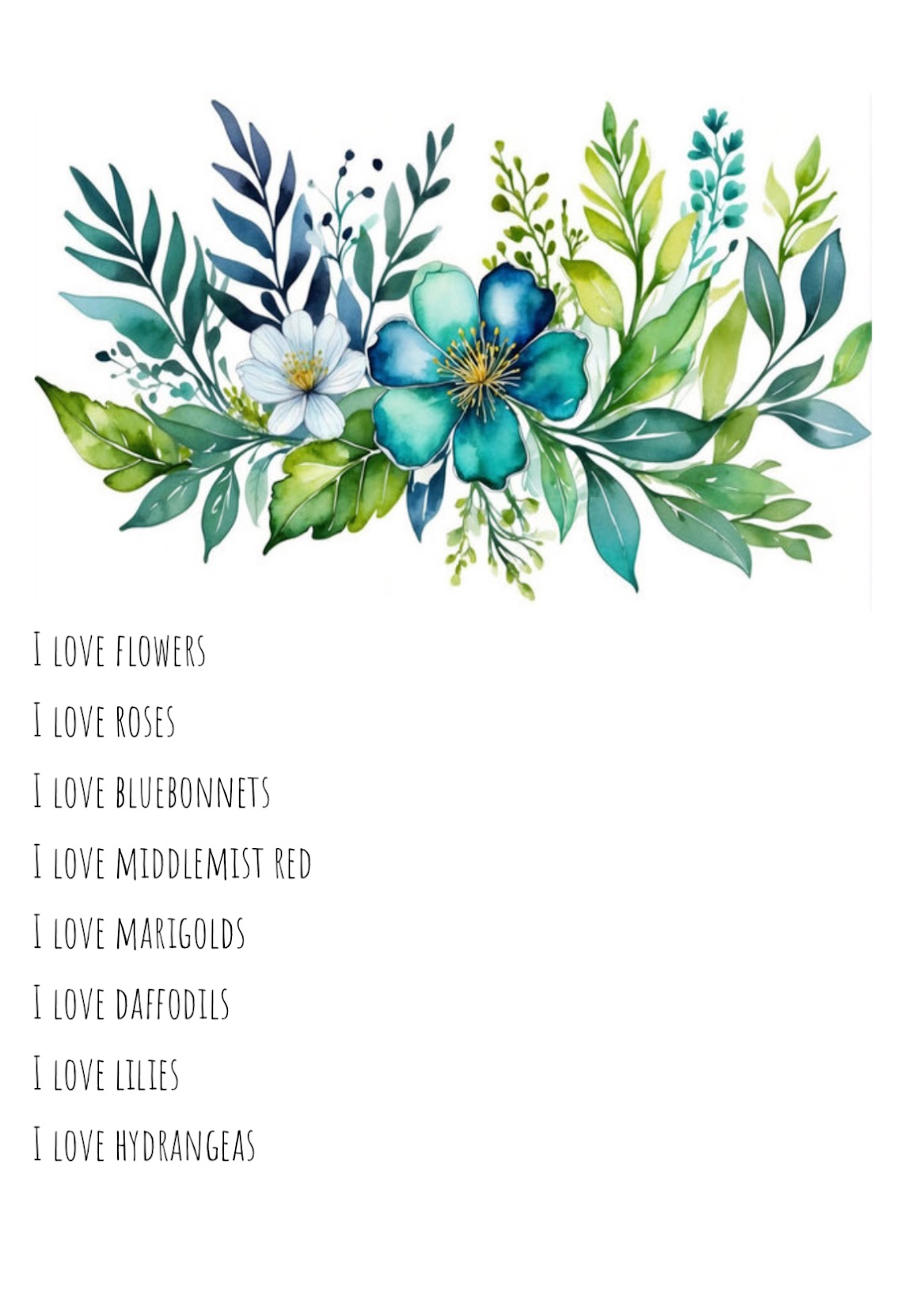
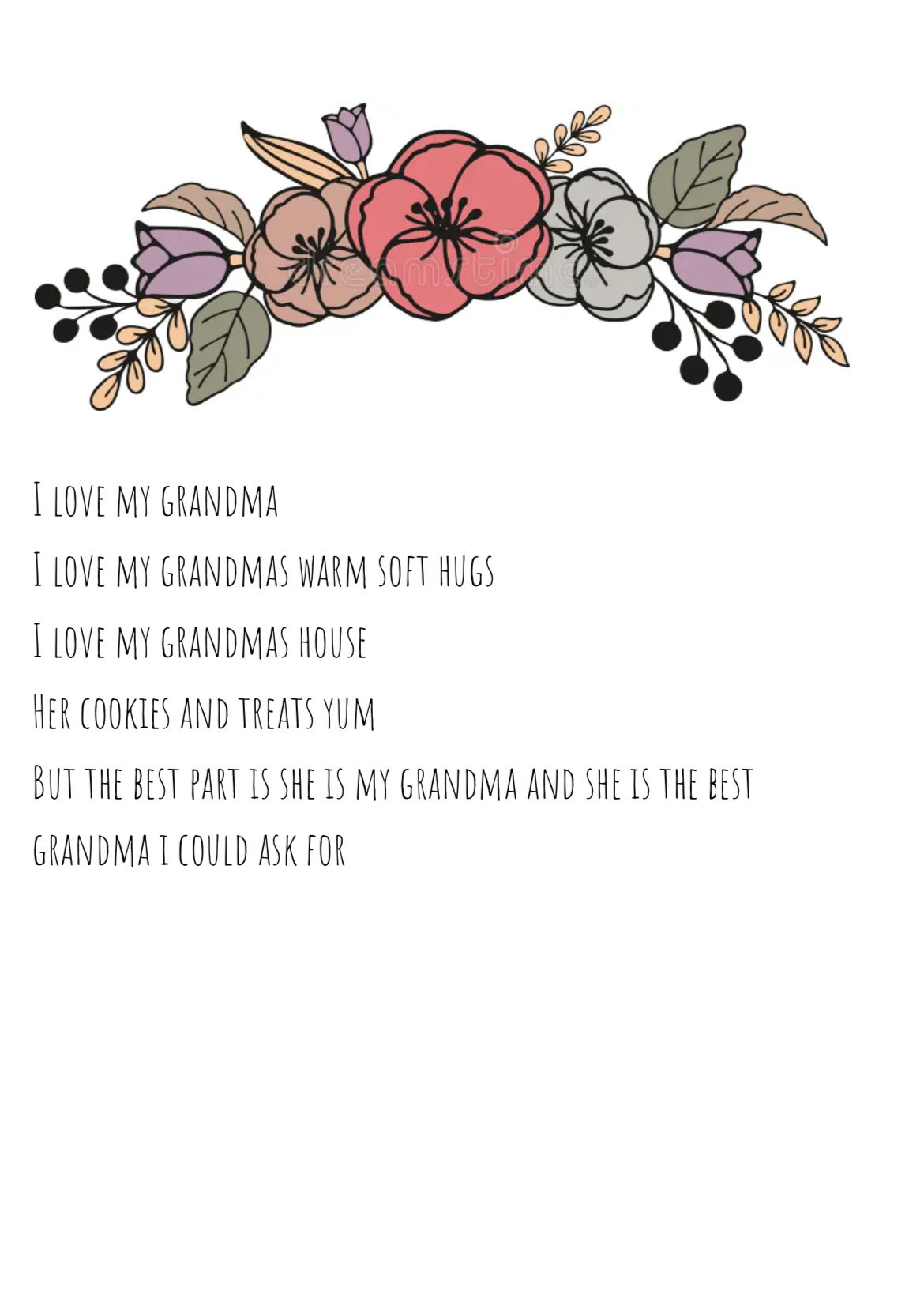
My slice of life today is courtesy of one of my granddaughters who wrote me some poems for my birthday. She read them to me on my birthday, but today, I received them in my text messages. It made me so happy. She’s a spunky and creative 4th grader.

She created her pages with images she found online, knowing I adore flowers. There are two poems below. The 2nd and 3rd images are a single poem.

Thank you to all who make this writing space
a place of safety, support, and beauty.
Choose Something Like a Star

One of my all-time favorite poems is this one by Robert Frost. I love it because I learned it through music by Randall Thompson as a high school student many years ago. I remember how the conductor took us line-by-line through this poem and brought out meaning that has stayed with me.

In this time of uncertainty and great difficulty, this poem reminds me of the need to have something more “to stay our minds on” for when people are swayed too much by blame or by praise (false or otherwise). We need information (use language we can comprehend), but we also need to listen to what is being asked of us (it asks of us a certain height). There are so many voices of doom, as there have always been, but humans are also so capable of extraordinary courage, kindness, and strength. Perhaps this poem is calling us to look for what will help us rise above the gloom. Choosing something like a star helps me. I hope it helps you.

Frost
Robert Frost
1874-1963″Choose Something
Like a Star”

(1916) 
O Star (the fairest one in sight),
We grant your loftiness the right
To some obscurity of cloud –
It will not do to say of night,
Since dark is what brings out your light.
Some mystery becomes the proud.
But to be wholly taciturn
In your reserve is not allowed.
Say something to us we can learn
By heart and when alone repeat.
Say something! And it says “I burn.”
But say with what degree of heat.
Talk Fahrenheit, talk Centigrade.
Use language we can comprehend.
Tell us what elements you blend.
It gives us strangely little aid,
But does tell something in the end.
And steadfast as Keats’ Eremite,
Not even stooping from its sphere,
It asks a little of us here.
It asks of us a certain height,
So when at times the mob is swayed
To carry praise or blame too far,
We may choose something like a star
To stay our minds on and be staid.

https://www.blueridgejournal.com/poems/rf-star.htm

Thank you to all who make this writing space
a place of safety, support, and beauty.

On Grief

I looked down at the bottom of the Zoom screen. Participants-78. I felt somewhat relieved that with a gathering of this size, I could remain somewhat invisible. The workshop was titled, “The Mystery of Grief, Writing into the Loss,” led by a favorite poet, Rosemerry Wahtola Trommer.

Rosemerry began by singing the beautiful words of Gregory Orr, a selection from a longer work:

Not to make loss beautiful,
But to make loss the place
Where beauty starts. Where
the heart understands
For the first time
The nature of its journey.

She talked about her own experience and how writing helped her to meet her grief in whatever form it presented itself. It’s everchanging, day by day. “Grief – what do you have to teach me today?” she asks. Rosemerry meets her grief with a daily poem writing process. She begins with this curiosity and writes, “Today grief is….”

As a group, we added our own responses to the prompt in the Chat. The responses were powerful and heartfelt. Some I captured in my notebook.

Today grief is…
tender
a vibration
bone-weary
a tumultuous river
a frozen river
underground
right behind my eyes
an endless knot
muscular
a freefall
beside me

Having lost a dear friend on Tuesday, March 6, my tears were close, but I felt comfort in this group of strangers coming together around loss. We had all experienced it, as every human being must. There was compassion for the experience of being in the grocery store and wanting to shout at strangers, “Can’t you see how sad I am?” Compassion for the woman who is the caregiver for her husband and his cancer after losing a daughter to cancer six months ago. Compassion for the impossibility of understanding suicide. Compassion for the new widow trying to figure out how to be in their shared home of 50 years without his presence.

Rosemerry encouraged us to pay attention and reflect on what happens in our bodies when we write. How does writing open us to know when we are writing what is true?

Isn’t it remarkable what we can carry at times and how we are also carried? Isn’t it a wonder how resilient and adaptive humans can become? Isn’t it a blessing when we gather with others (even strangers) and know we are not alone? How differently we might treat others if we only knew the things they hold in their hearts.

Please go here to read another poem we discussed called, “Made Visible” by poet, James Crews. It just might touch you.

Thank you to all who make this writing space
a place of safety, support, and beauty.
From Fear to Form

In recent years, I have enjoyed exploring poetry. Through the magic of Zoom, I have learned about so many current poets and their poems. Reading poems has led to writing prompts and my own attempts at writing poems. I get a lot of pleasure in playing with words and forms.

One form, however, has intimidated me and I told myself a story that I couldn’t write a pantoum. Until today. I’m taking a 6-class series called “Poetry is Life” taught by Ann Quinn through Yellow Arrow Publishing in Maryland. We usually study three poems each session and practice writing from them. The form we visited today was, for me, the dreaded pantoum. It seemed impossible to think of a topic that could become a pantoum. I didn’t know where to start. I even considered not trying.

Carefully, Ann walked us through Natasha Trethewey’s poem, “Incident” and essentially mapped the lines into a code I could follow as I wrote my own poem. I also learned that pantoums often reveal a narrative with layers of meaning.

Here’s my first pantoum:

Fine

He says he’s fine
after blood drenched his tie
I’m good, he says
bright red spots down his white shirt.

After blood drenched his tie
a friend stopped to help
bright red spots down his white shirt
It will be okay.

A friend stopped to help
He didn’t have to
It will be okay
but she’s not sure she believes

He didn’t have to
speak soothing words and take slow steps
but she’s not sure she believes
and kindness sometimes lies

Speak soothing words and take slow steps
I’m good, he says
and kindness sometimes lies
He says he’s fine.

Isn’t it so interesting that we can change the stories we tell ourselves? Today, I’m happy that some of my fears of new forms were set aside. I learned that a pantoum is actually a fun word puzzle. I am grateful to have teachers and other poets to guide me.

Thank you to all who make this writing space

a place of safety, support, and beauty.

Games People Play

I’m participating in Laura Shovan’s 12th Annual February Poetry Project. Each year participants create a poem each day in February and the month has a theme. One year, the theme was our bodies; this year, the theme is Games. I wasn’t sure I was going to enjoy this theme (I think I identify with work more than play, although this is changing as I grow older.)

Here is a poem I wrote using the names of game shows:

Marriage

To Tell the Truth
You could Press Your Luck,
Spin the Wheel of Fortune,
Even focus with deep Concentration
And never be able to
Name That Tune,
Answer The $64,000 Question
Or resolve a Family Feud.
You might
Wipeout on
The Gong Show,
Or put yourself in Jeopardy
But that won’t tell you whether to
Win, Lose, or Draw.
Whose Line is it Anyway?
Just to know if the Price is Right|
Or the secret Password
Won’t help in The Newlywed Game
Or this 48-year Match Game.
Deal or No Deal?

More and more, I’m learning to trust that if I just start, just put pen to paper, something will come. It feels good.

Form

As a music student, I was introduced to the concept of musical forms such as the sonata, fugue, or symphony. My teacher felt that a study of form across disciplines plus a study of how to listen would provide a deep education for anyone who pursued that path. I became a better listener of music when I knew more about form.

Fast forward nearly 50 years and I am back in the study of form. This time poetic form. My task this week was to write a poem in a form created by Marilyn Singer called a Reverso. You can read about the form and her poetry here. I have struggled to write such a poem, but I did learn a practice technique that helped me.

First, draft your thoughts.

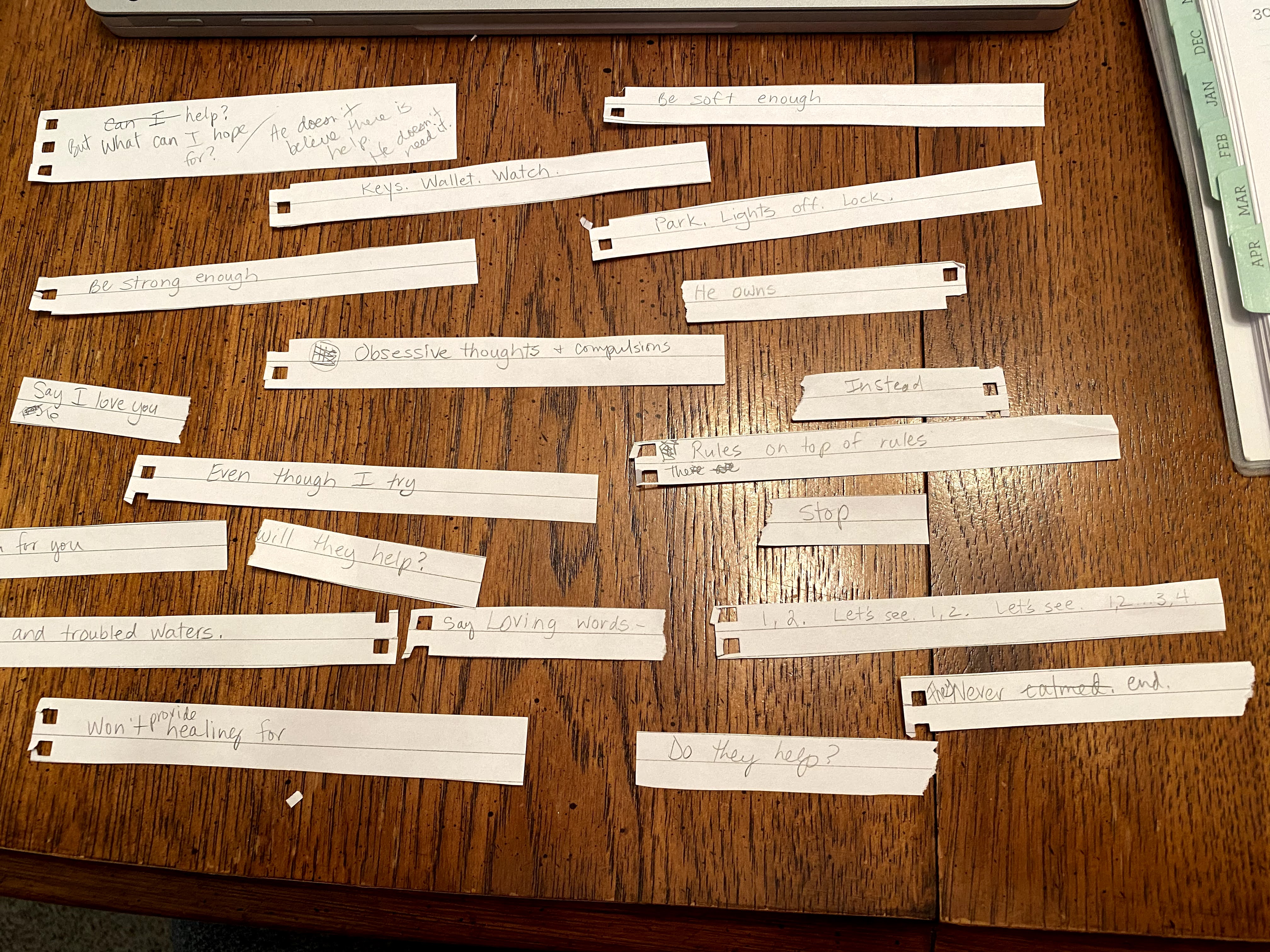
Next, write words, phrases, or sentences on strips of paper (1 line of poetry per strip).

Then, play with the strips. Change the sequence or tear it in half to make two lines. Discard unnecessary language. Add necessary language or revised language.

Finally, decide on the order that becomes the poem you want to write.

Publish.

My poem-draft is too rough to share here, but below is a picture of my workspace. This practice technique took away some of the frustration and fear associated with writing a reverso. Maybe it will help you or your students with their poetry!

Borrowing Words

I’m taking a short course with Georgia Heard on poetic forms. Last night we talked about forms of poetry that are created by borrowing words from other writers. Some in the class said they felt like they were cheating by borrowing, but I found it really fun and stimulating. T.S. Eliot said, “Good writers borrow; great writers steal.” I didn’t know that he borrowed heavily from other writers when he wrote “The Wasteland.”

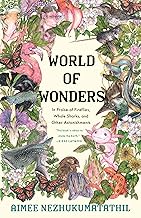
For my practice, I turned to one of my new favorite books, WORLD OF WONDERS, by Aimee Nezhukumatathil. Her writing about natural phenomena is gorgeous. I was sure I would find words to borrow there.

World of Wonders: In Praise of Fireflies, Whale Sharks, and Other Astonishments

Here is my FOUND POEM after “Firefly” in WORLD OF WONDERS:

Firefly

The first glimmer-pop of firefly light,
electric dress,
a small flame sputtering
erratic flashes of light
through the navy blue pause
just moments after twilight.

Such a degree of tenderness
the quiet reassurance
their light rhythm
recalibrates
sending out their love-light signals
a lime glow to the summer night air.

A community of teacher-writers.

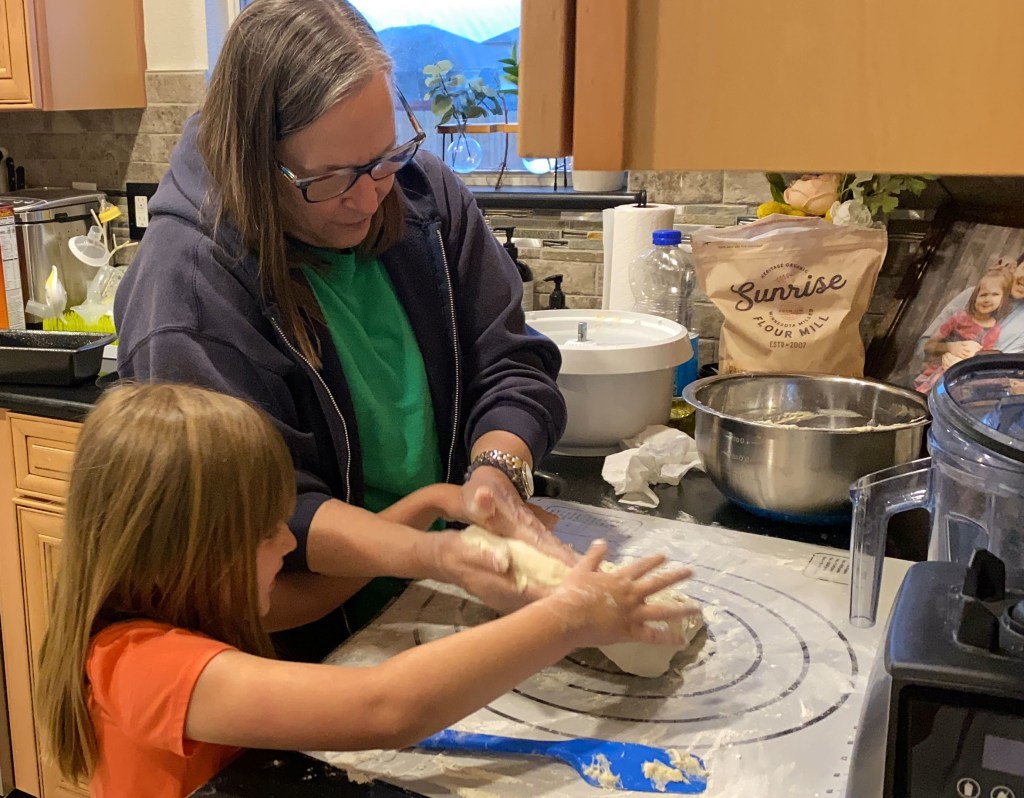
Bread Baking

So

Many

Memories

Returning today

As we make bread dough

Cup by cup with water

Yeast, flour, sugar, salt, and oil.

Soon our senses will burst with smells

And tastes of homemade goodness and love.

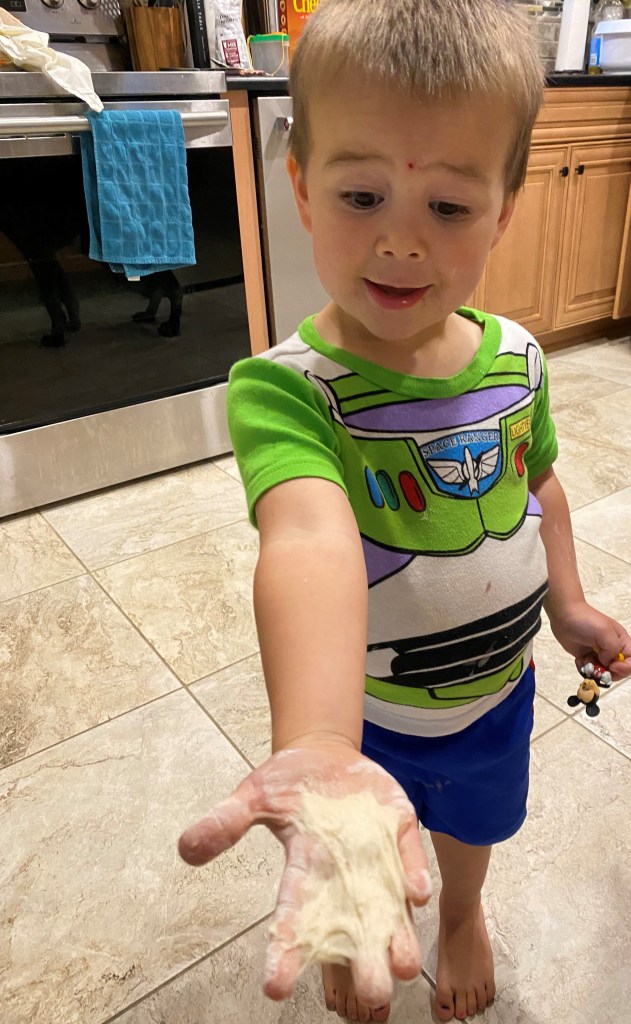
Thank you to Two Writing Teachers for this month of stories.