March 9, 2017

I’m writing this post so that sometime in the future I can look back and see how my learning has changed and grown.

I was introduced to the concept of learning progressions some time ago, but recently, I have really started to consider how to apply this knowledge in my work as a reading specialist/interventionist. Learning progressions make so much more sense to me than a standards, benchmarks, indicators description of learning. SBIs, as they are sometimes called, always left feeling like there was a huge “Yes, but…” following. Were they enough to really capture what readers and writers know and do?

The brilliant work of Lucy Calkins and her team at Teacher’s College has created learning progressions in reading and writing which have changed me as a teacher. They have named and explained so many steps of reading and writing processes that help me understand the work of students and my own reading and writing work.

Recently I read some articles about creating learning progressions and began to see that learning progressions can be broken down into ever smaller increments, similar to what I understand about the nature of fractals like broccoli. If you take a head of broccoli and break off a spear, the spear closely resembles the whole head. If you take the spear and break off a floret, the floret resembles the spear. Fractals occur in nature and can be created with mathematical equations that reiterate to create patterns. See some beautiful photos of fractals here.

So I started to think about how to name a step I want students to take next. What are the tiny steps to that next step? What would they look like? Sound like? How would I know when a step was taken?  Could I celebrate the ever smaller increments on the learning progression?

When I consider the students I work with, each is different in their reading strengths and struggles. Even though I may not know exactly where to meet them on the path toward being a lifelong reader or writer, I can try to walk the path for a while with them and see what they can teach me about the terrain they are crossing.
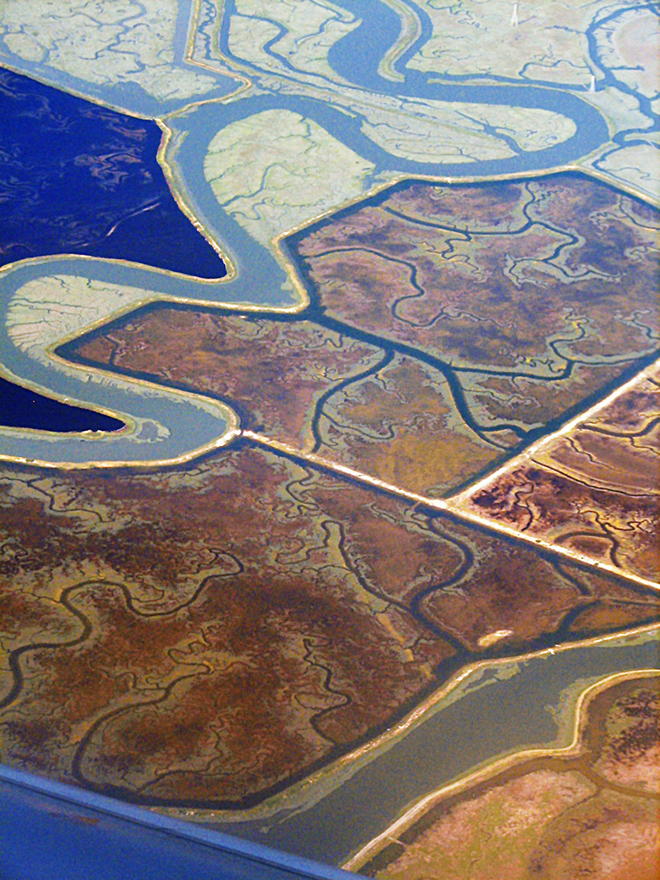
fractal_11a

March 8, 2017

Yesterday I was stuck.

Today I tried to become unstuck.

Today I’m considering how the tendency toward clutter and mess is balanced by the satisfying process of sorting. I find it calming to sort things. Maybe it’s the tangible results that are so rewarding.

The mail piles up–junk, bills, and an occasional card or letter. I sort it and feel better.  The laundry piles up and it must be sorted–lights, whites, darks, and reds (when my athletes all wore red T-shirts for sports). Books get returned to the bookroom and are sorted and filed. The paper involved in teaching reading in 5 grade levels (without enough planning time) creates mountains on my desk. Even if paperless were truly possible, there are endless email messages to sort and process. How fun it is to hit “Delete” over and over in an Inbox!

Today I made progress on clearing out my Outlook Inbox, filing books away, clearing papers off my desk, and re-establishing some order in my workspace. I was surprised how much I got done with a few minutes here and a few minutes there. As I worked, I thought about each of my students, what they needed next, how I could approach a new group starting next week, and conversations that needed to be had with classroom teachers. As my hands worked to manage details and make trash, my mind was slowing down, gratefully becoming unstuck.


March 6, 2017

A splitting sinus headache kept me home from work today. When medicine made it almost tolerable,

I made soup.

I made chili.

I organized the fridge.

I thought about the blessing of being home and doing what I used to do when I was a stay-at-home mom. It was restoring to me. Or should I say, a restoring of me? To take a break from work and cook to nourish my family was a deep, core experience for me today.

And, I saw a red-headed woodpecker on my tired, old maple tree!

redheaded woodpecker

March 5, 2017

Pseudonyms used to respect privacy.

The chapel was full so I slipped in  behind the Martins. Zelda was busy keeping their 11-month old baby girl, Lilou, busy. A supply of books, Cheerios, pacifier, and blanket were at the ready. It’s a challenge to bring a baby to a worship service, even when members are accustomed to the sounds of children’s voices.

Lilou had a little ponytail with a gray bow on top of her head like Pebbles from the Flinstones. She was so cute in her Sunday best, white tights, and little Mary Jane shoes. Lilou started to fuss and wasn’t happy in mama’s lap, standing up, sitting down, or on the blanket on the floor. So Sam picked her up and left the chapel for a time.

Zelda started to fidget the way mothers do when they suddenly have free hands. She pulled out her colored pencils and a coloring book for adults and began to fill in the intricate design with yellow, teal, and orange. She chose her colors carefully. Soon Sam returned with Lilou asleep in his arms. “What a lucky little girl,” I thought.

After a time, I glanced over and witnessed a painting-worthy sight. Lilou slept in one arm and Sam gently put his arm around his wife. The expression on his face was whatever you might call a male Madonna (in the classic sense). He gazed over his wife’s shoulder as she added colors to a beautiful design while his baby slept in his arms. It seemed that he sat in amazement at what his wife could create while loving what they had created together. It was an unforgettable look that held every bit of love, wonder, and magic that human eyes can comprehend. I won’t soon forget this moment.

March 4, 2017

When my parents came to Washington, DC in 1941, there was a small, but strong group of young people who became lifelong friends. As the youngest child, I was “doted” on by these members of what Tom Brokaw called “The Greatest Generation.” It was common in those days for women to form various clubs, complete with a constitution and bylaws. They had their own kind of mission statement and met monthly.

My mother belonged to a club called “Questors.” When it was Questors night, my mom took a shower after dinner, put on her Sunday clothes, including a girdle and a fresh pair of nylons. Sometimes her nylons had the black stripe up the back. She made sure the line was straight.  I remember watching as she manicured her nails, powdered her face, and applied eyebrow pencil, mascara, and lipstick. She looked perfect to me, and she smelled so good. I would stand next to her vanity with the 48″ round mirror, watch, and wonder what it would be like to be a grown lady.

Later, my mom’s club faded and was replaced by a group my parents and their friends called “The Whiz Kids.” As couples, they met once a month on Sunday evenings and discussed books, politics, music, art, travel, history, and often invited guest speakers. They loved learning together and their friendships were deep and lasting. Most of them lived away from their extended families so their friendships filled that need for belonging and closeness.

I watched them meet together and heard their spirited conversations, sometimes serious debates, sometimes loud laughter. I watched them grow older, travel together, and shower each other’s children with wedding gifts and then baby gifts.  They visited one another in the hospital, supported each other as spouses passed on, and were there for each other in every way. They were like my extended family, too.

I’m thinking about them tonight after visiting a friend of mine who is in the hospital. She fell in her home and was on the floor for 4 days before she was discovered. Severely dehydrated and with many other complications, she has been fighting for her life. Our friendship has spanned 40 years and though we’ve never been particularly close, we have a mutual respect, and I care about her. I know from my parents what it means to be a friend, even though I haven’t experienced friendship in the same way they did. But I realize that as we get older, it’s important to be looking out for one another, to not let too much time pass between contacts. We all come to the end of our days at some point. It helps to know that we are not alone.

March 3, 2017

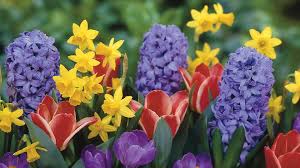
hyacinths

My youngest daughter will be moving in July.

She’ll live on Hyacinth Road.

I remember the pink, blue, and white hyacinths that bloomed the spring after the fall when my dad planted 100 bulbs ordered directly from Holland. He was so excited. He carefully planned patterns of flowers around the pink dogwood tree so that when the dogwood was in bloom, the bulbs would also burst into color. I remember that spring so vividly. He was so happy and kept asking my sister and I to stand by the flowers and have our picture taken.

I could tell he also felt nostalgic for the time he spent in Holland in 1941, having been reassigned there when it was no longer safe in Munich, Germany. I wish I had asked him what season it was when he moved to Holland. Could he have seen the miles and miles of fields of flowers? The years 1939-1942 were the defining years of his life and laid the foundation not only for his career, but also for his spiritual life. His next assignment was Kentucky. His time in the “hollers” of Kentucky added another layer of richness to his appreciation of people and places.

The pink and blue and white hyacinths were the colors my mother always wore, mostly blue until she was 70. After that, she was more often drawn to pink. My mother always wore the soft, gentle colors that matched her quiet softness. That is not to say she lacked strength. Perhaps she, like the pink and blue hyacinths, had to have a resolute determination when placed next to King Arthur daffodils and scarlet tulips.

The fragrance of hyacinths shouts spring.

I can almost smell them now.

March 2, 2017

I’m one of the late evening writers. I’m not sure why, but that’s not what I want to say tonight.

Today I had my thinking challenged in a conversation about what collaboration really means. It started when a colleague asked how we acknowledge and meet the needs of our students who are true introverts, who may find all our emphasis on group work and “collaboration,” not only uncomfortable, but even terrifying. As an introvert myself, her comment immediately got my attention. Most often, I prefer to work by myself. I love communicating with others, sharing ideas and possibilities, but when it comes to “doing the work,” I would rather do it by myself. Taking time and having quiet to process and plan best fits who I am.

Then, another teacher contributed that we often call the work of our CTs collaborative, when they are more a forum for communicating about instruction, students, and the nuts and bolts of teaching. We spend time with each other, work to come to consensus about common teaching and learning outcomes, and sometimes, that communication leads to collaboration.

In her view, when each member of the group brings their ideas to the table, the best of each person’s ideas grows into something new that none had come to on their own. Communication facilitates collaboration, but if there is not an evolution of thinking, collaboration has not yet occurred. Everyone agreeing to one person’s ideas is not the same as creating something new together.  Collaboration may not happen in the meeting itself. It might become an iterative process where the internal and external processors in the group are free to work away from the group and come together again with new ideas and ways of thinking.

This is something of a shift in how I think I might move forward with our grade level teams. Maybe meetings will seem less frustrating or less scary by acknowledging that for some people (including me) a product of collaboration can include time for individuals to work alone and return to the group refreshed. Is this another way to think about going slow to go fast? What might happen if we lift some of the pressure to have a product every time we meet? (And where does that pressure come from anyway?) How could the quality of work be raised if we paused to consider and respect how the best of each of our ideas could contribute to something more than any of us could do alone?

March 1, 2017

After Ava read a J at 97% accuracy, 64 WPM, and with the expression of a true actress, we walked down the hall to see her mentor.  On the way, I told her we were on the “Bragging Train.” She had earned the right to brag about her progress. At first, she was shy about telling Mrs. H. of her success. But Mrs. H.’s hugs melted her guarded stance.

We started to walk back and met Mrs. F., our coach, in the hallway. We told her we were on the Bragging Train too. She replied, “Is your brain on fire? Oooh, can I touch it? Ouch, that’s some serious heat! Mrs. Miner, you may have to put up a protective shield!”  Ava giggled and stood taller.

Next we passed her classroom from last year. With a quiet signal, I asked if we could share a moment. Without hesitation, Ms. C., opened the door wide, brought Ava forward, and her entire second grade class broke into “Uno, dos, tres, Ole! Ole! Ole!” Ava grew some more.

“I can’t stop smiling. I’m so happy.” My heart was bursting as well. So much hard work, worry, frustration, and patience brought us to this celebratory moment. It does take a village. I’m so grateful for Ava for reminding me of why our work matters.


February 28, 2017

Home.

Worked late again.

I got a lecture

from my family

“No matter how much

you love your work, you need

B-A-L-A-N-C-E.”

I know.

But how?

How to stop

when there are

so many needs?

How to stop

when there is

so much to learn?

How to stop

when the fear

of stopping

grabs in

my

chest?