March 4, 2017

When my parents came to Washington, DC in 1941, there was a small, but strong group of young people who became lifelong friends. As the youngest child, I was “doted” on by these members of what Tom Brokaw called “The Greatest Generation.” It was common in those days for women to form various clubs, complete with a constitution and bylaws. They had their own kind of mission statement and met monthly.

My mother belonged to a club called “Questors.” When it was Questors night, my mom took a shower after dinner, put on her Sunday clothes, including a girdle and a fresh pair of nylons. Sometimes her nylons had the black stripe up the back. She made sure the line was straight.  I remember watching as she manicured her nails, powdered her face, and applied eyebrow pencil, mascara, and lipstick. She looked perfect to me, and she smelled so good. I would stand next to her vanity with the 48″ round mirror, watch, and wonder what it would be like to be a grown lady.

Later, my mom’s club faded and was replaced by a group my parents and their friends called “The Whiz Kids.” As couples, they met once a month on Sunday evenings and discussed books, politics, music, art, travel, history, and often invited guest speakers. They loved learning together and their friendships were deep and lasting. Most of them lived away from their extended families so their friendships filled that need for belonging and closeness.

I watched them meet together and heard their spirited conversations, sometimes serious debates, sometimes loud laughter. I watched them grow older, travel together, and shower each other’s children with wedding gifts and then baby gifts.  They visited one another in the hospital, supported each other as spouses passed on, and were there for each other in every way. They were like my extended family, too.

I’m thinking about them tonight after visiting a friend of mine who is in the hospital. She fell in her home and was on the floor for 4 days before she was discovered. Severely dehydrated and with many other complications, she has been fighting for her life. Our friendship has spanned 40 years and though we’ve never been particularly close, we have a mutual respect, and I care about her. I know from my parents what it means to be a friend, even though I haven’t experienced friendship in the same way they did. But I realize that as we get older, it’s important to be looking out for one another, to not let too much time pass between contacts. We all come to the end of our days at some point. It helps to know that we are not alone.

March 3, 2017

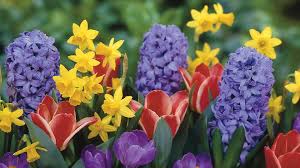
hyacinths

My youngest daughter will be moving in July.

She’ll live on Hyacinth Road.

I remember the pink, blue, and white hyacinths that bloomed the spring after the fall when my dad planted 100 bulbs ordered directly from Holland. He was so excited. He carefully planned patterns of flowers around the pink dogwood tree so that when the dogwood was in bloom, the bulbs would also burst into color. I remember that spring so vividly. He was so happy and kept asking my sister and I to stand by the flowers and have our picture taken.

I could tell he also felt nostalgic for the time he spent in Holland in 1941, having been reassigned there when it was no longer safe in Munich, Germany. I wish I had asked him what season it was when he moved to Holland. Could he have seen the miles and miles of fields of flowers? The years 1939-1942 were the defining years of his life and laid the foundation not only for his career, but also for his spiritual life. His next assignment was Kentucky. His time in the “hollers” of Kentucky added another layer of richness to his appreciation of people and places.

The pink and blue and white hyacinths were the colors my mother always wore, mostly blue until she was 70. After that, she was more often drawn to pink. My mother always wore the soft, gentle colors that matched her quiet softness. That is not to say she lacked strength. Perhaps she, like the pink and blue hyacinths, had to have a resolute determination when placed next to King Arthur daffodils and scarlet tulips.

The fragrance of hyacinths shouts spring.

I can almost smell them now.

March 2, 2017

I’m one of the late evening writers. I’m not sure why, but that’s not what I want to say tonight.

Today I had my thinking challenged in a conversation about what collaboration really means. It started when a colleague asked how we acknowledge and meet the needs of our students who are true introverts, who may find all our emphasis on group work and “collaboration,” not only uncomfortable, but even terrifying. As an introvert myself, her comment immediately got my attention. Most often, I prefer to work by myself. I love communicating with others, sharing ideas and possibilities, but when it comes to “doing the work,” I would rather do it by myself. Taking time and having quiet to process and plan best fits who I am.

Then, another teacher contributed that we often call the work of our CTs collaborative, when they are more a forum for communicating about instruction, students, and the nuts and bolts of teaching. We spend time with each other, work to come to consensus about common teaching and learning outcomes, and sometimes, that communication leads to collaboration.

In her view, when each member of the group brings their ideas to the table, the best of each person’s ideas grows into something new that none had come to on their own. Communication facilitates collaboration, but if there is not an evolution of thinking, collaboration has not yet occurred. Everyone agreeing to one person’s ideas is not the same as creating something new together.  Collaboration may not happen in the meeting itself. It might become an iterative process where the internal and external processors in the group are free to work away from the group and come together again with new ideas and ways of thinking.

This is something of a shift in how I think I might move forward with our grade level teams. Maybe meetings will seem less frustrating or less scary by acknowledging that for some people (including me) a product of collaboration can include time for individuals to work alone and return to the group refreshed. Is this another way to think about going slow to go fast? What might happen if we lift some of the pressure to have a product every time we meet? (And where does that pressure come from anyway?) How could the quality of work be raised if we paused to consider and respect how the best of each of our ideas could contribute to something more than any of us could do alone?

March 1, 2017

After Ava read a J at 97% accuracy, 64 WPM, and with the expression of a true actress, we walked down the hall to see her mentor.  On the way, I told her we were on the “Bragging Train.” She had earned the right to brag about her progress. At first, she was shy about telling Mrs. H. of her success. But Mrs. H.’s hugs melted her guarded stance.

We started to walk back and met Mrs. F., our coach, in the hallway. We told her we were on the Bragging Train too. She replied, “Is your brain on fire? Oooh, can I touch it? Ouch, that’s some serious heat! Mrs. Miner, you may have to put up a protective shield!”  Ava giggled and stood taller.

Next we passed her classroom from last year. With a quiet signal, I asked if we could share a moment. Without hesitation, Ms. C., opened the door wide, brought Ava forward, and her entire second grade class broke into “Uno, dos, tres, Ole! Ole! Ole!” Ava grew some more.

“I can’t stop smiling. I’m so happy.” My heart was bursting as well. So much hard work, worry, frustration, and patience brought us to this celebratory moment. It does take a village. I’m so grateful for Ava for reminding me of why our work matters.


February 28, 2017

Home.

Worked late again.

I got a lecture

from my family

“No matter how much

you love your work, you need

B-A-L-A-N-C-E.”

I know.

But how?

How to stop

when there are

so many needs?

How to stop

when there is

so much to learn?

How to stop

when the fear

of stopping

grabs in

my

chest?


January 17, 2017

Yesterday, Jane bought a ukelele and her 12-year old niece gave her a lesson. Together they played “Somewhere Over the Rainbow/What a Wonderful World” (Israel Kamakawiwo’ole) and a fresh happiness filled the house. Here’s a little poem for Jane.

Cello.

Piano.

Guitar.

Accordion.

And now Ukelele.

Stroke. Touch. Pick. S-t-r-e-t-ch.

And now strum.

Heart and hands

Express what words can’t.

Beauty.

Challenge.

Life.

Sweet music

And a smile on your face.


January 10, 2017

15871460_10211882591169508_9045688502283836893_n-1

Poem 1 for Saturday, January 7, 2017

Was it a “God-wink?”

An alignment of stars?

A serendipitous coincidence?

I don’t know, but

What I do know

Is that while

Driving home from yoga,

The happy, unplanned

Sighting of my son

Showing his son

The wondrous, unplanned

Sighting of deer

(In a snowstorm

On Woodford Road)

Was about the best

Thing

That has happened

In

A

Very

Long

Time.

Poem 2 for Saturday, January 7, 2017

They stopped by woods on a snowy

Morning.

By chance, I passed by.

“Why are you here, Grandma?”

I answered,

“Because I love you,”

But what I meant to say was

Generations of our family

Have found solace

In the sight of a deer.


January 3, 2017

WALK.

It’s one of the earliest things we learn to do.

Variations come with certain ages and change the perspective one might have about walking. Our walk might change by choice, or not by choice.

WALK (Verb: to move along on foot): Saunter. Stroll. Climb. Hike. Limp. Rush. March. Pace. Tread. Amble. Trudge. Meander. Plod. Prance. Shuffle. Strut.

Then, there is WALK (Noun: a discipline): the way to go, the course to follow, the line, the terrain, the path.

And WALK (Noun: a pathway): aisle, avenue, boardwalk, byway, crossing, footpath, mall, promenade, sidewalk, trail.

Scriptures learned come to mind as I consider WALK:

“walk by faith, not by sight” (2 Corinthians 5:7)

“walk, and not faint” (Isaiah 40:31)

“yea, though I walk through the valley of the shadow of death, I will fear no evil.” (Psalms 23: 4)

And a favorite poem:

Velvet Shoes (by Elinor Wylie)

Let us walk in the white snow

In a soundless space;

With footsteps quiet and slow,

At a tranquil pace,

Under veils of white lace.

I shall go shod in silk,

And you in wool,

White as white cow’s milk,

More beautiful

Than the breast of a gull.

We shall walk through the still town

In a windless peace;

We shall step upon white down,

Upon silver fleece,

Upon softer than these.

We shall walk in velvet shoes:

Wherever we go

Silence will fall like dews

On white silence below.

We shall walk in the snow.


In 2017, I am choosing WALK as my OLW to guide me. I want to walk physically for a healthier body and clearer mind on familiar and unfamiliar paths. I want to walk peacefully with my family and friends. I want to walk softly, with awareness of the feelings of others.  I want to walk resolutely toward new learning and growth in my walk as teacher and learner. I want to walk gratefully for all that is good. And if there is snow (and I hope there will be), I’ll walk lovingly in velvet shoes.

December 6, 2016

I drove down Lawyers Road as sleet tickled my windshield. The trees stood bare and black in the dim morning light against the low, gray sky. I noticed the brilliant green underbrush, the new growth of summer, now able to get the light needed for sustaining tender shoots through the winter. I thought how the mature trees shed their leaves creating a protective cover on the ground and allowing light to shine on younger, tender plants. I thought of nature’s kindness to let the small ones keep their leaves a little longer.

This image stayed with me all day. It seemed to be a message of hope. A reminder that with loss comes the opportunity for new growth. An example of sacrifice and service so quietly and perfectly executed. I’m grateful.

November 29, 2016

This fall our third through fifth grades agreed to participate in the Global Read Aloud by reading PAX by Sara Pennypacker during October and November.  Most classes finished reading yesterday. I was fortunate to be asked to read aloud to a fourth grade class. (As a reading specialist, I haven’t had the opportunity to read a whole novel to a class in a very long time). What an amazing experience it has been to share this novel with students! They were able not only to follow the story, but also were able to think deeply, feel empathy for Pax and Peter, and ask interesting questions that stretched all of us.

Today, we had the privilege of participating in a 45-minute Skype session with Sara Pennypacker, the author of PAX. The whole 4th grade gathered in the library. Sara talked for about 20 minutes about her “writerly life.” Here are some of the points I want to remember:

  • She was happy to speak to 4th graders to encourage them to keep growing as writers so that perhaps one or more might become the storytellers of the next generation. She said all generations need to create storytellers so that the stories will remain and not be lost.
  • She encouraged them to write about their passions, which we have heard before, but then she qualified it by saying that she didn’t just mean writing about the things we love.  She included anger, fear, hate, obsessions, as well as love in her list. In fact, two very different passions inspired PAX. She said that her sense of wonder at the bonds that can be forged between children and animals, both pets and wild, was one driving force in the story. The other passion was the anger, frustration, and outrage at the outcomes of war and the 30 million children who are currently homeless due to war. She said in the history of the world, children have never waged war. It has been the adults who go to war while much of the suffering of war is born by children.
  • She talked personally about her writing process and described how she is always working as a writer no matter where she is. She worked on PAX for seven years. The first year was all inner rehearsal–no words put on the page for a year! I loved how she was open about needing to create a quiet space where she could be comfortable (in her jammies) and how she uses her time swimming to shut out the world in order to be able to imagine more deeply. We all need quiet to be able to access our imagination in meaningful ways.
  • She encouraged us to find an activity that allows us to access our own creativity.
  • All you need is a pen and paper.
  • She talked about her decisions as a writer. The original manuscript for PAX was twice as long as the original. For several years, she read, revised, and recreated her scenes, characters, and word choice. She was intentional about keeping a reference to time and place out of the story because she wanted each reader to sense that “this could happen here.” She felt that if we could tie the setting to a specific time in the past or future, we might dismiss the story as not relevant.
  • The students mentioned a metaphor she used near the end of the story when Pax gently put his teeth on Peter’s wrist. She was so happy they noticed it, and she said it was one of her favorite metaphors. She called it “a bracelet of teeth.” She said metaphors have to work, not only to accurately describe something, but also to bring the desired emotional connection. I think she hit mastery with that one.
  • The students wanted to know if she planned a sequel. Again, she related the intentional decision to end the book where she did so that all readers could have the story live within them as they worked out for themselves what would be the next consequence of the last paragraph.

I’m happy tonight to have had the experience of reading with children and the opportunity to share in their thinking. So many times a student would make a comment or ask a question that took us to a new level of understanding. I’m also so happy tonight for the gift of writers who are willing to take 45 minutes on a Tuesday morning to talk with 75 fourth graders and their teachers.