Laughter

When my daughter asked if I would watch her children so she and her husband could celebrate 10 years of marriage, I said, “Of course!” But first, I had to take a moment to process that my youngest child has been married for 10 years! I honestly don’t know how time has passed so fast.

My time with her three children was spent playing games, watching a movie, building rooms with blocks to house the collection of animals, and providing lots of snacks. In the afternoon, we took a walk which ended with one slipping into the creek. Thankfully, the temperatures were mild and no one was hurt. Just wet and maybe a little embarrassed. We hurried home to a warm bath.

As I got J warm and dry, he smiled and looked up at me and said, “Grandma, you laugh easily.” I don’t think anyone had ever voiced that observation about me, but it felt very nice coming from the mouth of my shy, almost 6-year old grandson. It must have felt important for him to say.

As Charlie Chaplin is often quoted, “A day without laughter is a day wasted.”

Probability

I have just finished reading THE PROBABILITY OF EVERYTHING by Sarah Everett. It’s a hard book to discuss without spoiling it for others. But as my friend, Sally, said, “Read it and then we’ll talk!” It may be one of the most powerfully written books I’ve ever read. It centers around a young girl’s relationship with her father. Having had a very close relationship with my dad, I felt a deep connection to this character. From dancing in the kitchen standing on my father’s feet, to gazing at stars together, to concerns about his failing health in later years, I felt like I knew exactly what Kemi felt. This connection is one reason I read–to feel part of the universe of humanity in ways that matter. Kemi loves science and specifically, probability.

In 1941, my father began his training with the FBI. He was fluent in German which was a strong asset at the beginning of World War II. The FBI trained him as a cryptanalyst, or codebreaker, and he was successful in using his knowledge of “codes and ciphers” to translate many intercepted communications into English. This was long before we had computers to assist investigators. The computer was his brain. From this period of his life, he developed a love for probability. While he had a rule that he would never place a bet for more than the cost of a meal, he did occasionally buy a lottery ticket for the fun of “what if the odds would favor me this time?” He spent hours around the kitchen table trying to teach me the basics of probability and strategies for simple code breaking. He may have been discouraged when I didn’t readily catch on or share his passion.

Fast forward to today. I realized that as a reading interventionist, I am like my dad. I think I’ve found the passion for code breaking through reading instruction. I’m teaching my students how to break the code by using patterns and probability with the 26 letters of the alphabet. Word play is a fun kind of exercise in probability. For example, playing Wordle more than 250 times, I had a 98% success rate. If your rate was 100%, I bow to you.

Young readers must become code breakers, too. I know this isn’t all they need, however; they also need a rich exposure to literature that touches their hearts, raises questions, and fosters curiosity. Just as code breaking served a higher purpose in my father’s work, I understand that decoding is not the end goal of reading. I fear that too many educators are forgetting this. In our current climate in elementary school, we are hyper-focused on phonics and related skills which will be meaningless if we don’t also help students WANT to read. Code breaking must serve the higher purpose of connecting us with ideas, wonder, and love for each other.

Read THE PROBABILITY OF EVERYTHING. Then, let’s talk.

A Walk and a Concern

You could almost feel the electricity and anticipation in the air (or was it hormones?) as the local high school football team returned to school for early morning practice. As I walked around the track, I missed the quiet mornings of my earlier walks this summer, but I recognize the rhythms and patterns that accompany a new school year. Dreams were being born right on that field this very morning.

As I walked, I admired the energy and ability of these young players. I love the beauty of a spiraling pass, a straight kick, and a long run. I’ve even been known to get a lump in my throat when witnessing the effort and athleticism of a player who has worked hard to build his or her body for that one moment in that one game.

The varsity, junior varsity, and freshman teams occupied both ends of the football field and the hockey field adjacent. They huddled, drilled, shouted, and sweat their way through the morning practice. Coaches blew whistles, gave commands, evaluated performance, and watched over this field of boys and a few girls dressed in red and black. On some faces, you could see the happiness of being back with teammates. On other faces you could see fear; on others, you could see toughness, even cockiness, which probably also masked some fear. My heart went out to these young men who are expected to memorize and run plays, expected to be in the right place on the field at just the right second, expected to show no weakness even in the surety they will feel pain.

Sadly, this morning, I heard the head coach humiliate a player with a sneer that has left me angry. I get that coaches need to establish their authority, but why do we continue to support coaches who belittle, swear, and manipulate young people for their own gain? Admittedly, I’m not the most enthusiastic fan of football; some might think I’m too soft. But these are still young people, young players, who are forming their identities, their dreams, and goals. Why the need to crush one so that others step up? I worry about that one who was publicly shamed.

I continued my walk even though I really wanted to voice my concern. Here, I’m voicing my concern.

A Virtual Fist-Bump Promise

Thank you to my writing friend, Donnetta, who led the way to a commitment to show up with a Slice of Life piece today. I’m here, largely to honor that fist-bump promise, but also to give some time to maintaining a writing practice. I’m reminded of the social construct of learning, in that we learn best when we learn with others. It is sometimes easy to forget that as we plow through our busy lives. My writing matters to me, but sometimes I forget that I wouldn’t be a writer without friends who were brave and said, “Let’s do this.”

Another example of writing friends is the collaboration of Georgia Heard and Rebecca Kai Dotlich who have become close friends over many years of writing poetry for children. They write together, laugh together, and teach workshops together. Their newest book, Welcome to the Wonder House, illustrated by Deborah Freedman launched today. It’s a poetry book that explores ideas and questions which awaken our sense of awe and wonder. https://astrapublishinghouse.com/product/welcome-to-the-wonder-house-9781635927627/

I watched their launch “party” today. Georgia and Rebecca talked about how the idea for the book was born during a long car ride. Georgia scribbled notes as the conversation became more compelling. What followed were brainstorming sessions, topic choices, poem assignments (Georgia wrote about stars because she likes stars), phone-call revision sessions, and conversations with their editor who helped them shape the final version of the book. I loved seeing their writing notebooks and especially the illustrator’s notebook. Deborah Freedman has written and illustrated many books of her own, but this was her first collaboration with other author/poets. It was so interesting to hear how she looked for repeated words as a way in to the themes and images the poems might suggest; how she considered the purpose of the book and its intended audience as she drew and painted.

In my TBR stack, I also have Dacher Keltner’s book, Awe: The New Science of Wonder and How it Can Transform Your Life which I am looking forward to reading. It will be interesting to compare his writing with the impact of the short poems for children in Welcome to the Wonder House. (My copy arrives Friday!)

What has inspired awe or wonder in me lately? Well, there was this bug on my dining room door which was absolutely translucent. I’d never seen one like it before. The wings were so fragile and etched with a beautiful design. It stayed there for several hours. Sadly, I lack the photography skills to do it justice, but here’s a picture of the bug that filled me with more than a bit of wonder at this vast and diverse planet we inhabit.

Under the Linden Tree

There are lots of reasons why I love Linden Trees. I started to notice them more than 45 years ago when we studied Walther von der Vogelweide’s (c. 1170-1230) famous poem called “Under the Lindens” in my German Literature class. I always smiled when saying this poet’s name. It sounded like music–the word connotes a pastoral scene with bird song. Walther was from a beautiful place, or so I imagined.

His is a love poem which paints a picture of young lovers meeting under the linden tree where flowers and grasses witnessed a thousand kisses and were known to no one but a tiny little bird. Such romance never grows old.

Later while visiting Berlin, I learned of the famous lindens that line the streets of that city. All throughout Europe, the linden is loved for its heart-shaped leaves, its ability to attract bees for honey making, its wood for carving, and its medicinal properties. You can read more here.

But this morning, under an early summer blue sky, I loved the linden once again for its lovely fragrance and its pleasing silhouette. The way its flowers connect to the tree so delicately. I wished to linger near and sit under its shade.

An Unknown Friend

I boarded the Metro to ride into Washington, DC to meet a friend. I was excited to be meeting a fellow teacher/writer whom I had only known from her blog and writing sessions through TeachWrite. It was a beautiful spring morning to be out and about with bright sunshine, tulips, dogwoods, and emerging green everywhere.

I can’t read while I ride in any moving vehicle, so I entertained myself by watching the people come and go. It’s interesting how few people make eye contact, and if they do, they quickly busy themselves with phones or papers, digging through backpacks and tote bags. I still like to watch. I’m always curious about what others are reading or what they might be listening to on those little white earbuds that have become so commonplace.

Counting the stops, there were just two more until I would get off at L’Enfant Plaza. At Metro Center, a woman got up and walked toward the door. The train was still moving toward her stop. I had noticed her earlier when she took a small notebook out of her bag and started writing.

As the train slowed, she leaned over and asked, “Do I know you? You look very familiar.”

I said, “No, I don’t think we’ve met,” but as the doors opened, I called, “Are you a writer?”

“Yes!” She waved and wished me a good day. I may never know who she is, but I smiled and felt I had a new friend anyway.

Pilgrimage

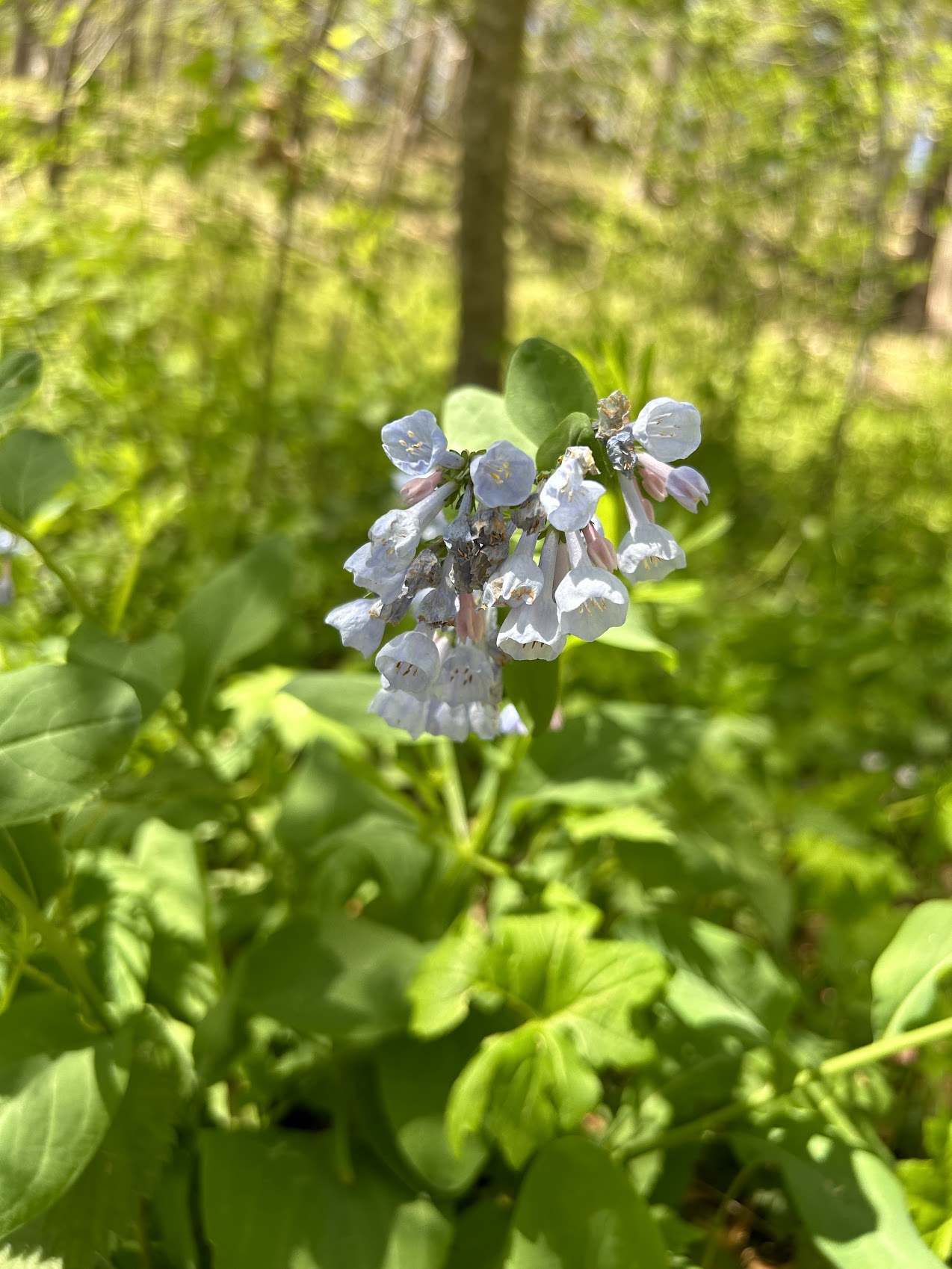
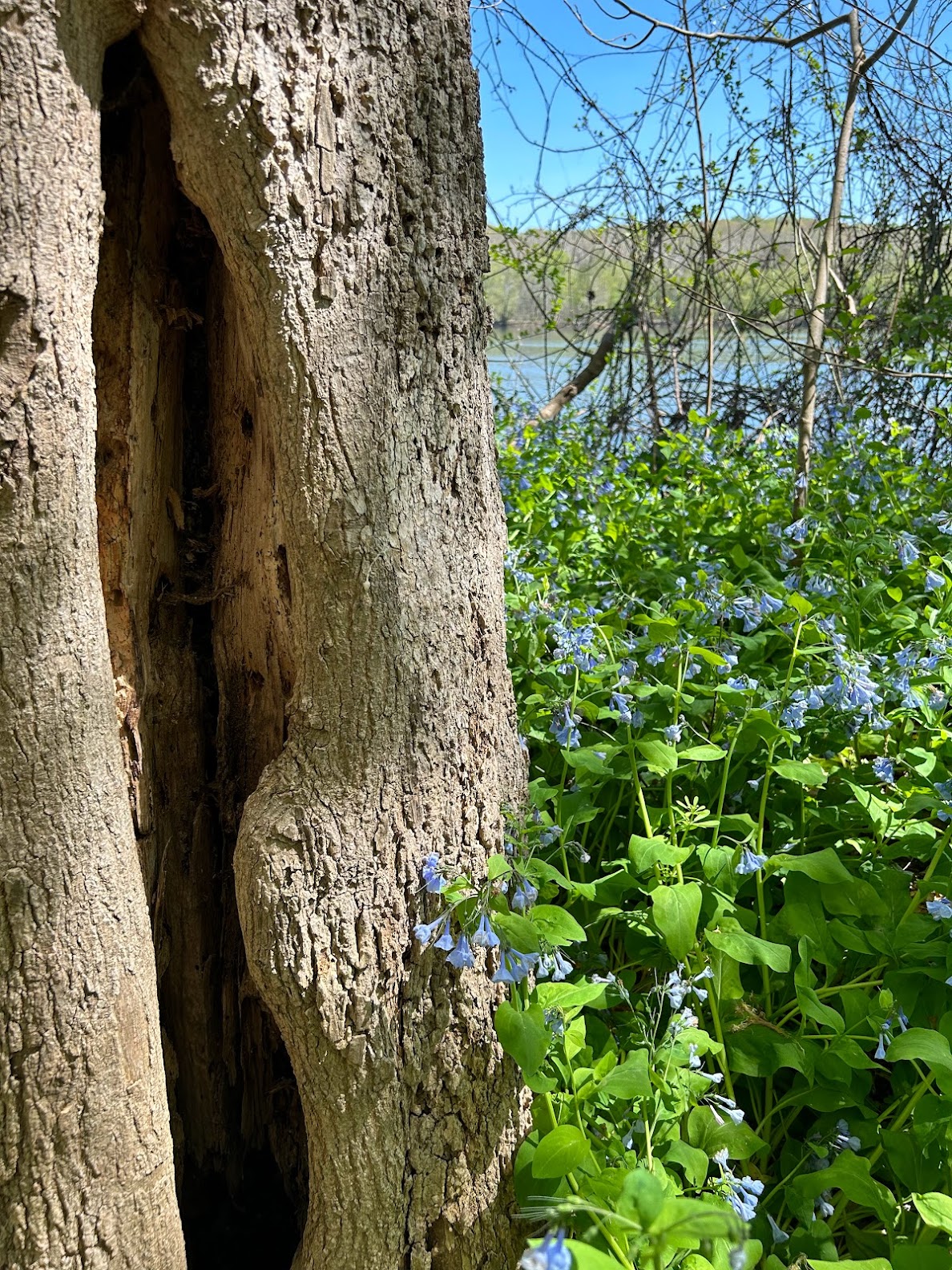
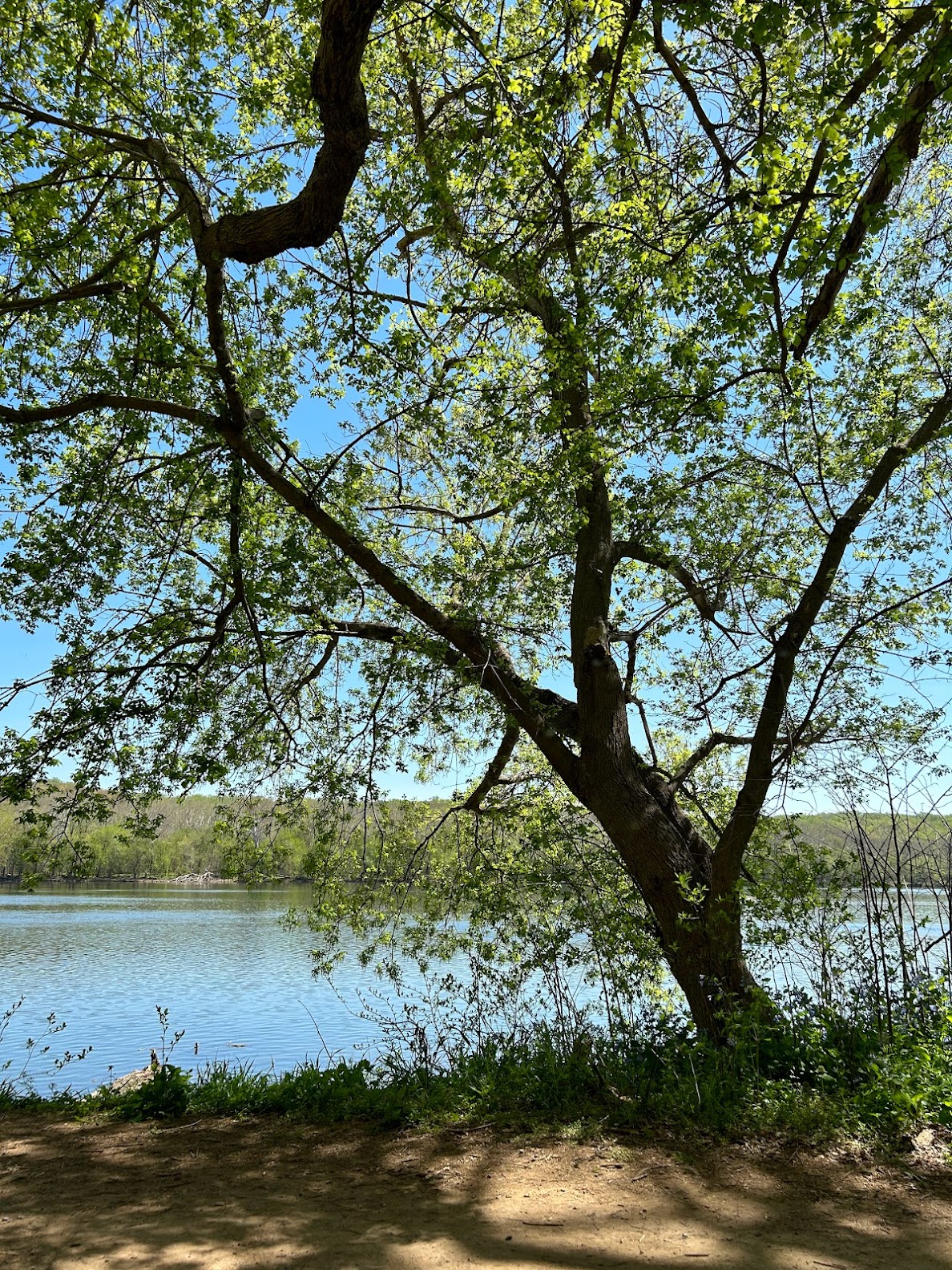
It was time to go. To go to Riverbend for the annual blooming of the bluebells. For the sweet scent of the damp forest floor, the growing forest canopy, the sounds of Canadian geese, cormorant wings, and Carolina Wrens. For the dappled sunlight on ancient fallen trees and the gentle ripples of water on the muddy banks of the Potomac. For the minnows and their shadows, and tadpoles in the vernal pool. Yes. It was time to go.

I make this pilgrimage every year. I feel like it is my place, my sanctuary, and my feeding ground. You may have your own place and know the feeling my words fail to describe. I came away with a lighter heart and more grounded soul.

As I write this, I’m reminded of Yeats, “I will arise and go.” https://www.poetryfoundation.org/poems/43281/the-lake-isle-of-innisfree

I’m glad I arose and went.

Language Fascination

Yesterday I embarked on my yearlong quest to battle the mountains of paper in my basement. By way of background, my mother never saved anything and lived a clutter-free life. I guess the clutter pendulum swung the other way with me, and now I am faced with boxes and boxes of memorabilia, pictures, children’s art and sweet lovenotes. It doesn’t help that my husband is also prone to save papers. In fact, we have all of our tax returns back to 1976. (That’s a little embarrassing.)

But that’s not the story I’m telling today. My youngest daughter, Jill, was born prematurely and had some developmental delays which we successfully addressed thanks to wonderful OT, PT, and Speech therapists. Their work converted me to early intervention. It was almost magical to watch how their expertise helped shape my daughter’s brain-body connection.

Our family stories now include many anecdotes of the “use and confuse” stage of Jill’s language development which re-ignited my fascination with language. I had remembered a few of these anecdotes, but yesterday while I sorted papers, I found one that I had forgotten.

One day, while Jill watched “Fantasia” (she LOVED that movie), she said, “Mom, come look at the fairy dragons!” Fairy dragons. What could she mean? When I went to check, there were dragonflies on the screen. Jill’s naming of things often involved word parts, but also a little creative twist that made it so interesting.

Another time, there were whirlybirds or helicopters from our maple tree stuck on the car window. Some were very tiny. Jill was in her car seat and said, “Mommy, I have pelicans, too!” After some thought, I realized she had put together the idea of bird in whirlybird with the word part “heli-” in helicopters and produced “pelican.” Our brains are so complex and full of wonder.

Once we had an evergreen bagworm cocoon stuck to the siding on our house. It was up high, almost to the eaves of the roof. It really bothered Jill. One day, when we pulled into the driveway, I parked and turned off the engine. Jill said, “Mommy, you really need to tell Daddy to get that kangaroo off of our house.” It was hard not to laugh, but I chuckled and told her I would and he did, eventually. All I could figure on that one was she remembered the /k/ sound started the word and it had the /oo/ sound, too. So it came out, “kangaroo.”

I love these little stories, especially now as Jill is a grown woman with three children of her own, because they remind me that having the open mind of a child can enrich our language and our experience of life itself. I love that she noticed the small things, that she trusted me to share them, and that her developing brain gave me a fresh look at the world around me. It was joy.
Memory Lane

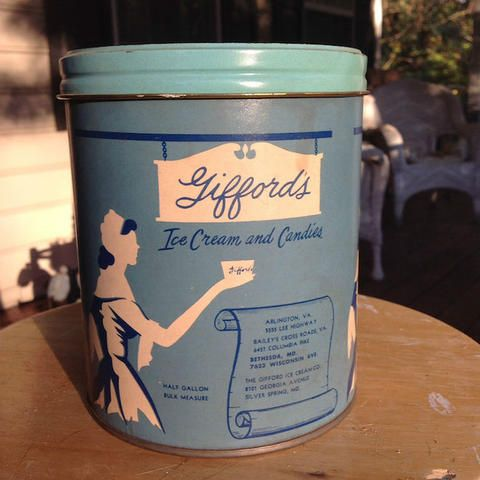
Today I had lunch with Sally at a location in Arlington, VA dear to my heart. You see, it used to be the home of Gifford’s Ice Cream which my family visited every Sunday after church. Sometimes, we would “go in” for an ice cream sundae. My dad always got a banana split; my mom and I usually got a hot fudge sundae. They served the hot fudge in tiny little ceramic pitchers that were so fun to pour. I can recall rich smell of sugar, chocolate, and homemade candies almost as much as I can remember the feel of slightly sticky chairs and tables.

On Sundays when we stayed in the car, one of us would go inside with my Dad to help carry the cones to the car. Pistachio for Dad; Swiss Chocolate for Mom; Lemon Custard or Mint Chip for my sisters and me. My mouth is watering just thinking about this ice cream. In the summers, we had to lick fast in order to prevent our ice cream from melting all over our Sunday clothes, and in the winter, we would shiver as we ate and enjoyed it just as much.

Some years ago, it became Joe’s Pizza. Joe renamed his restaurant “A Modo Mio.” The building itself has not changed much on the outside and I enjoyed sitting near the big picture windows that face what was, until recently, Lee Highway (now Langston Avenue).

As Sally and I talked and talked and talked about writing, teaching, family, and change, I had the warm sense of being grounded in a place where friends and family have built memories over the years. Grateful.

Affirmation of Affirmations

Recently, I listened to Jon Acuff’s new book, Soundtracks. It’s a fun book to listen to and gave me a lot to think about as I continue my own process of change. The technique he describes in working to change our thoughts involves choosing new thoughts and practicing these new thoughts by repeating them aloud morning and evening for at least 30 days.

I have been struggling to reach a particular student since school began this year. He is a fourth grader with K/1 literacy skills. He has mastered every avoidance trick in the book and uses distractions to derail lessons. Finally, I split his group and am seeing him 1:1. At first, it was the same. I felt like I spent the entire time redirecting him–trying every trick I knew to keep him on task.

However, on October 13, 2022 things changed. I decided to apply what I had learned in Soundtracks with this student. At the beginning of the lesson, I took out a mirror and had him repeat the words, “I am a reader. I can do this.” We had a successful lesson. At the end, I had him repeat again, “I am a reader. I can do this.”

As we walked to class on October 14, he asked, “Are we going to do that mirror thing?”

I said, “Do you want to do that mirror thing?”

“Yes.”

Every day since, we begin and end each lesson with the mirror and his affirmations. Today we added, “I can learn new things.” So far, that’s 7 consecutive days of affirmation and successful reading lessons.

For the first time in his life, he completed a “chapter” book. Yes, it was decodable and yes, it had six short chapters. To him, it was still a chapter book. I was so proud of him and glad that he responded to the words, “I am a reader.”

Today, when I picked him up, he was on the carpet. Reading.